
Building Human-Centered AI Agents for Productivity and Collaboration
| Role: Product Manager @ Swit
| Duration: Jul 2022 - Jan 2025

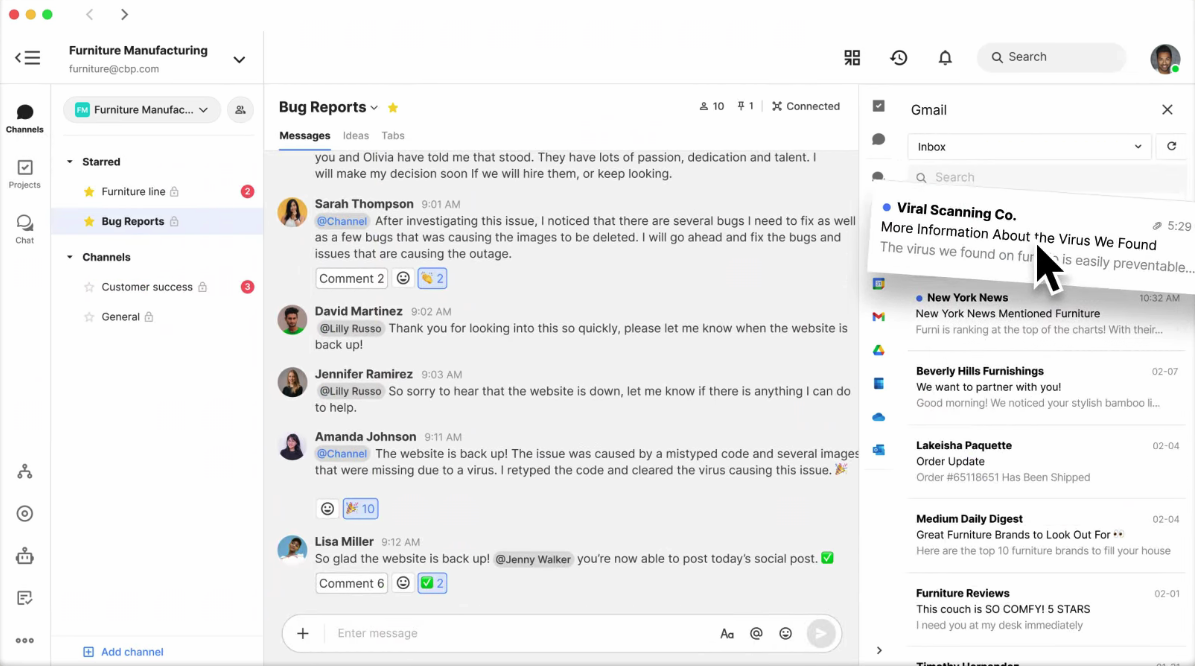
Swit is an enterprise software with a mission to rehumanize the workspace, where project management and team communication lives in one to maximize productivity, transparency, and interoperability. As a product manager, I worked at the intersection of user research, product design, and software development, building features and implementing AI technology that help teams collaborate more effectively in their everyday work. My role required balancing user needs, technical constraints, and business goals, while continuously grounding decisions and iterating the product based on user behavior and feedback.
Designing Delightful, Trustworthy User Experiences
Before the rise of AI agents, much of my focus was on designing clear, intuitive experiences that reduce friction in digital workflows.
I led a project to redesign Swit’s onboarding flow for new users, synthesizing insights from product analytics, user interviews, and support tickets. By examining where users were dropping off and identifying a clear “aha-moment” in our product, I built onboarding experiences that emphasized clarity, progressive disclosure, and early moments of value. These changes significantly improved trial-to-paid conversion by 125% and user activation by 30%, as measured by subscription rates and product usage.
In parallel, I launched multiple integration apps that expanded Swit’s usability across different workflows and industries. This work required close collaboration with engineers and designers to ensure that each integration felt coherent within the broader system rather than bolted on. I took time to deep-study the target apps (Gmail, Google Drive, Google Calendar, Outlook Mail, Outlook Calendar, Salesforce, HubSpot) and their ecosystem, as well as behavior of users who frequented the apps in order to provide an experience that could truly provide value of decreasing context switching and connecting workflows.
Overall, designing and building user-centric software taught me:
Begin with the user’s problem, not the solution. Oftentimes, the solution the user demands is not the most ideal solution, and great technology with no usability is a wasted resource. Observe the user’s day-to-day workflow, and evaluate their pains and needs in order to determine the core problem to be solved.
Every product decision is a tradeoff of priorities: user experience, technical feasibility (which includes time and cost), and business value.
Focus on building a “T-shaped” product. Solve one problem amazingly, then expand to deliver edge cases.
Leading projects as product manager taught me:
Communication and rapport with the team is essential in building a good product. When designers understand the intent and developers are motivated to create delightful experiences, the end result is so much different than otherwise. As a plus, you save time and the process becomes enjoyable.
Leave room for feedback and iteration. While a product manager’s role is to define features, once review and conversation begins with designers and engineers, they will bring light to essential considerations. Be ready to listen and make sure time is allotted for agile development.
Lingo and data earns you trust and power. When you speak the language of users, engineers, marketing team, or leadership, and have data to back up your point, collaboration and communication becomes clearer and easier.
Building AI Agents as Collaborative Teammates
Building on this foundation, I later led the development of Swit’s first AI agent — a virtual teammate that lives in the digital workspace and is embedded within existing workflows, taking care of tedious, logistical work so that humans can focus on work that matters most.
From 0 to 1, I defined agent capabilities as well as how users would interact with the AI, including providing an interface to guide users in drafting inputs to yield best outputs. I determined where, when, and how the agent should act in synergy with our existing digital workspace. I worked closely with engineers to design LLM prompts, function calls, and guardrails that prioritized usability, accuracy, and user safety. Together, our team implemented natural language Q&A, document AI, and 50+ function calls (MCPs) across seven applications. This process involved fast, cross-functional iteration over testing LLM responses, observing failure cases, refining interaction patterns, and developing a user-friendly yet robust and enterprise-ready software.
Later, I led the launch of an on-device personal AI agent in partnership with LG Gram. This project extended the same interaction principles into a new context, where performance constraints, privacy considerations, and system-level integration became central. Leading cross-functional collaboration across engineering, design, operations, and external partners, I oversaw the end-to-end product delivery and launch, including organizing the packaging and marketing message.
Transitioning to AI agents from a traditional enterprise was exciting yet difficult, as the team made internal adjustments and processes and roles changed based on changing needs. Outside of product manager duties, I also took on operational duties: managing our payment system, defining pricing strategy and token limits, obtaining security compliance and OAuth and API verifications, rewriting our privacy policy, writing articles for the help center, managing translation keys and drafting product copy, and working with the marketing team to create our new landing page. I collaborated closely with the CEO and cross-functional team leaders for development strategy, and communicated external stakeholders for partnership, marketing, and security compliance.
My first full-time role out of college was a whirlwind of a journey, but a rewarding one that taught me about resilience, fast adoption, flexibility and scrappiness, and keeping the eye on the product’s mission — relentlessly working towards the same mission our team started with, of rehumanizing the workspace, while the interface and technology of our product and the scope of my day-to-day work changed drastically to better suit our users and the world.